



 Comment
The BYDAS journey towards centralised data and operations: from application monitoring to a proprietary ERP/CRM with artificial intelligence, MCP and voice commands.
Published on3 November 20262Views0 Reviews0 Comments

Digital transformation at BYDAS began with a belief that predates today’s discussion about artificial intelligence: essential business data and processes should remain under our control. From an early stage, we sought to host technology on our servers, take responsibility for its protection and develop software we could understand, adapt and maintain.
This philosophy of digital sovereignty and centralisation shaped the agency. It first influenced how we supported client projects, then how we organised our own business. Today, it allows us to manage a substantial part of our activity through a platform we developed and perform operations using voice commands.
Building technology we can control and develop
We have always used external technology, including open-source solutions. However, we sought to avoid having our processes entirely constrained by other platforms’ decisions. Developing our own components gave us room to adapt functionality and support projects over time.
The relationship with our technology has primarily centred on service continuity, support and care after delivery. Rigid licensing was never the main purpose. We wanted the ability to intervene: to understand each solution and respond when needed.
Monitor: the first expression of this philosophy
That requirement led us to create Monitor, a central interface that regularly receives telemetry from applications developed by BYDAS. Alongside this information, it periodically checks the availability of applications distributed across several servers.
Monitor brings together information that would otherwise be scattered across projects and infrastructure. It helps us follow application performance and direct technical intervention. A shared view gives us more context and reduces fragmentation.
For more than a decade, surveys and supplier assessments have highlighted our responsiveness. We regard this infrastructure as one foundation of that recognition, alongside our knowledge of the projects and the work of our team.
From monitoring projects to managing the business
That experience raised a question: if we could centralise technical oversight, why were we still managing the agency through tools that divided our attention?
Platform integrations can be useful, but they introduce dependencies. An API change, service failure or revised commercial terms can force a review of processes spanning several systems. Our response was to develop a platform that brought business operations together.
This became ZéSá, our ERP/CRM. The project took shape alongside advances in AI and delivered the vision we already held in 2024: connecting administration, documents, invoicing, proposals, sales activity, services and people within a common structure.
We retain deliberate external integrations. For invoicing, we use the API of software certified by the Portuguese tax authority. For us, sovereignty means understanding and managing dependencies while retaining the ability to decide how our processes work.
Continuity across contacts and opportunities
The CRM holds contacts accumulated over more than a decade. AI supports categorisation and, together with several APIs, helps enrich company information, associate people with organisations and provide indicators about partners and prospective clients.
The sales journey is integrated too. Contacts arrive automatically from online channels, while we add those originating elsewhere. We qualify them, archive those that do not fit and follow opportunities through analysis, meetings, proposal preparation, sending and follow-up.
Acceptance or rejection completes the journey with useful information, including known reasons for the decision. This continuity has become important to our commercial activity: we can see where each opportunity stands and what should happen next without introducing another operational tool.
Finance, contracts and activity in the same context
Financial dashboards cover indicators such as EBITDA margin, estimated financial runway, collection rate, average transaction value, monthly flows and recurring business. Detailed values and definitions provide a consistent basis for management discussions.
Recurring service contracts feed these dashboards and generate instructions for invoicing. Allocated client hours are connected with monthly activity, helping us track delivery against agreements and prepare activity reports.
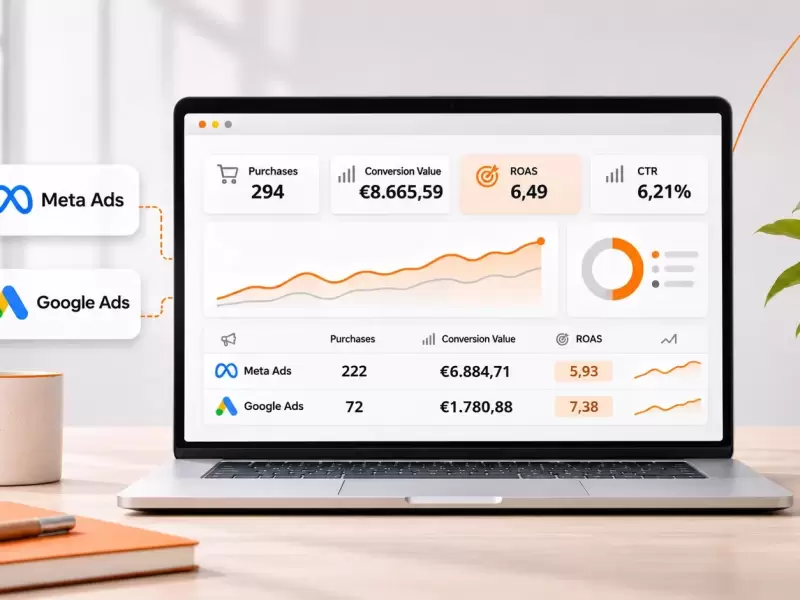
We also centralise social media, SEO and paid media reports. Their graphical dashboards can be shared automatically by email at the end of each cycle. Contractual, operational and financial information becomes part of the same process.
Publishing, approvals and internal knowledge
Editorial management connects scheduling, production and client approval. It covers social posts, advertising and articles, with notifications for the people responsible for each task.
The process includes reminders for manual publication and quality reviews after content goes live. This helps us follow work through to its final check rather than stopping at the scheduled publication.
Our internal Wiki holds procedures, onboarding material, client information and management documentation. Access to decrypted content requires a cryptographic key and three layers of access barriers. That protection reflects the responsibility involved in bringing sensitive knowledge into one system.
Proposals: five times the production capacity
One of the most demanding modules has also had one of the greatest impacts. According to our internal assessment, the system enabled us to increase proposal production capacity fivefold.
It starts with service templates and a largely standardised offering. AI supports cost analysis, taking prospective client information into account, and performs a final consistency review. The aim is to accelerate preparation and reduce inconsistencies while keeping the team responsible for the proposal.
During a client’s review, the system can collect responses about price, strategy and other aspects of the proposal. It also records interactions, including document views and PDF downloads. These signals help us assess commercial positioning, clarity and contractual aspects.
This information supports follow-up and improvement without treating a document opening as proof of buying intent. The main result is greater commercial capacity and more context for decisions.
AI within an organised operation
ZéSá also supports employment contracts, leave and training. There is room for company culture: on their birthday, each colleague can access a prize wheel with real rewards.
In our internal assessment, delivering this first vision corresponded to a management efficiency index of 80%. This is our own reference, rather than an independent measurement or a claim that costs fell by that percentage. It expresses our assessment of the work we have organised and simplified.
With MCP, we moved from querying to acting
This year, we progressed with MCP servers across our projects. Within ZéSá, we developed an approach that allows AI to infer table context from the available structure and content, reducing the need to describe every new area manually.
The integration also supports operations. Approving leave, creating a proposal or sending it can form part of a conversation. A reply such as 'Yes' can confirm an approval when the relevant request has already been identified in context.
This transition requires clarity: understanding an intention and correctly performing an operation are different parts of the process. The value lies in connecting the instruction with the right information and action.
The latest step: voice-led management
This week, we completed the stage we had been working towards: using voice to carry out operations. We can request analysis and reports, create and send proposals, initiate invoicing, qualify contacts, approve leave and add information to the Wiki.
The command is the visible part of years of development. Behind it sit the data, templates, integrations and understanding of our processes. AI became more useful because there was an operation we could connect and improve.
We share this journey because other businesses face similar fragmentation. A digital transformation strategy, supported by web applications and integrations, can begin with one specific process and develop alongside the business.
ZéSá is the route we chose for BYDAS. It does not need to be reproduced in full to provide inspiration. The first decision is to identify where time, context and responsiveness are being lost. That is where we started.
If you enjoyed this article, follow us on LinkedIn...
Add this news source to your preferences.



Rate this article




0 Comments