



 Comment
Discover fulfilment companies in Portugal and European alternatives for Shopify. Compare warehousing, Shopify integrations, carriers and full commerce solutions.
Published on14 October 20269Views0 Reviews2 Comments

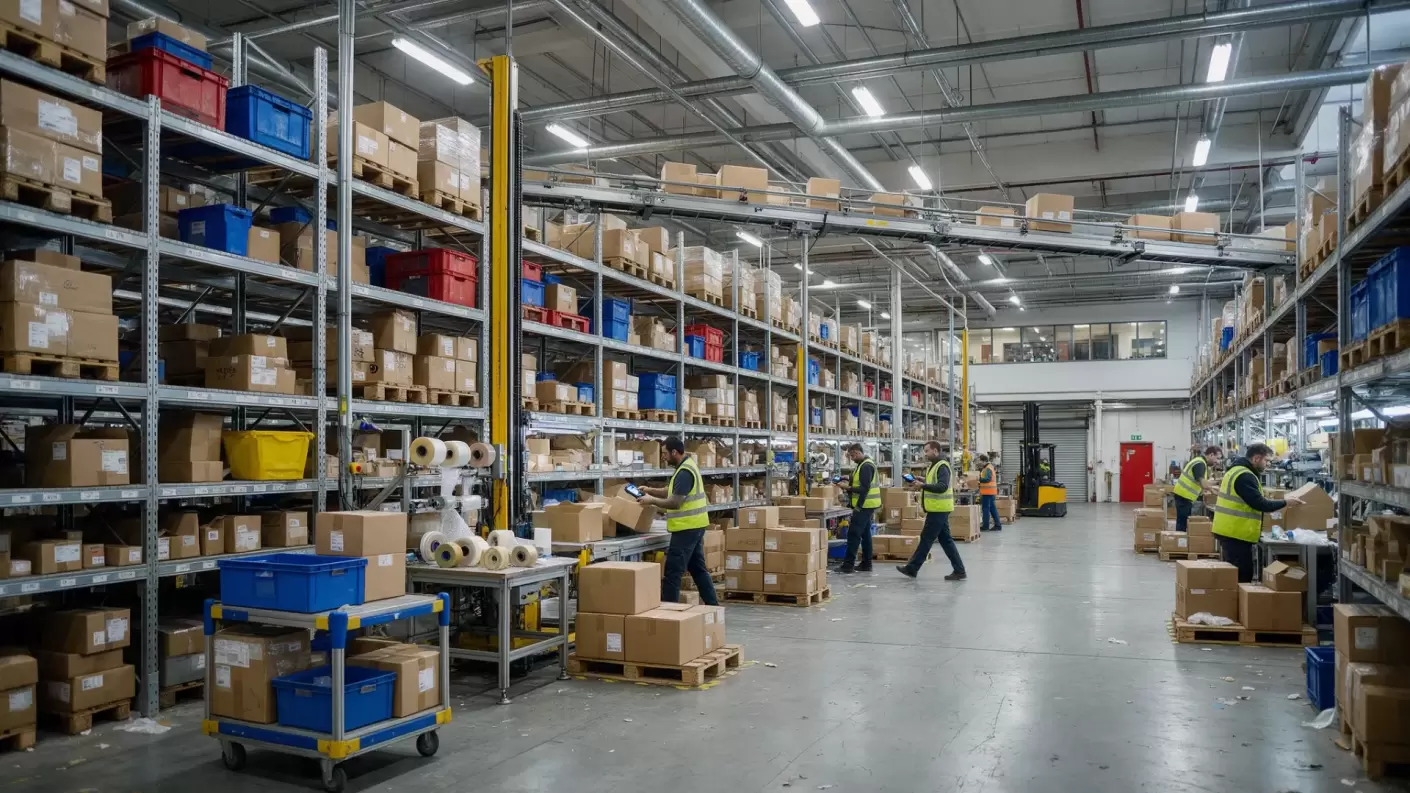
Selling online does not necessarily mean operating your own warehouse. For many brands and entrepreneurs, outsourcing storage, order preparation and shipping can reduce the initial investment required to launch or scale an e-commerce business, while allowing internal teams to focus on products, marketing and growth.
Fulfilment companies receive a merchant's products, store them and prepare each order when a sale takes place. Some providers go beyond logistics and offer full commerce models that combine warehousing with technology and other services related to running an online business.
For Shopify merchants, choosing the right provider is particularly important. Finding warehouse space is only part of the equation: merchants should also understand how the provider integrates with Shopify, which information is synchronised and which carriers are available for delivering orders.
How does a fulfilment company work?
In a traditional fulfilment model, the merchant retains ownership of the products but stores them at a specialist operator's facilities. When a customer places an order, the information is sent to the warehouse, where the products are picked, packed and handed over to a carrier.
A typical fulfilment service may include:
- Receiving and storing goods.
- Inventory management and stock updates.
- Picking and packing orders.
- Handing parcels over to carriers.
- Updating tracking information.
- Processing returns.
This model allows a company to process hundreds or thousands of orders without investing in its own logistics facilities or building an internal warehouse team.
Fulfilment companies in Portugal and alternatives for Shopify
1. UCM Digital
UCM Digital offers a proposition combining logistics, technology and services associated with international e-commerce operations. The company advertises warehousing infrastructure in Portugal and the Netherlands, which may be particularly relevant to brands selling across several European markets.
Shopify: UCM Digital states that its technology can integrate online stores and sales channels. Before signing an agreement, merchants should confirm whether there is a ready-to-use Shopify connector, which information is synchronised and whether additional development work is required.
Carriers: the company offers shipping through different carriers according to market and service requirements. The public information available does not clearly identify every carrier, so merchants should request an up-to-date list directly from UCM Digital.
Who is it suitable for? D2C brands looking to store products in Portugal while developing an international operation.
2. CTT Logistics
CTT provides logistics services for e-commerce businesses that want to outsource activities such as warehousing, order preparation, distribution and returns.
Shopify: Shopify integration is available to facilitate the transfer of products and orders and reduce manual processes between the online store and logistics operation.
Carriers: distribution can use CTT's own logistics and delivery infrastructure, with different domestic and international services depending on the agreement and destination.
Who is it suitable for? Businesses with a significant proportion of their customers in Portugal that value access to an established national distribution network.
3. DHL Fulfillment Network
DHL Fulfillment Network provides access to an international network of logistics centres. Its model is particularly relevant to businesses looking to expand into several markets without establishing and managing their own warehouse infrastructure in every country.
Shopify: DHL provides Shopify integration solutions that can automate the exchange of orders and logistics information.
Carriers: delivery services and partners may vary according to the country, warehouse and service level selected. Merchants should confirm which options are available specifically for Portugal, Spain and their other target markets.
Who is it suitable for? Shopify stores with growing order volumes and international expansion plans.
4. byrd
byrd specialises in e-commerce fulfilment and operates through a European network of logistics centres.
Shopify: Shopify integration is available to synchronise orders and inventory, helping merchants automate the flow of information between their store and fulfilment operation.
Carriers: byrd works with different delivery services according to the market and logistics centre processing each order. Specific availability should be checked for each destination country.
Who is it suitable for? Brands looking to distribute inventory across Europe and potentially reduce delivery times in several markets.
5. ShipBob
ShipBob is an international fulfilment platform providing technology for managing inventory, orders and distribution. It can serve Portuguese merchants through its European logistics network, although it does not currently operate its own fulfilment centre in Portugal.
Shopify: ShipBob offers a Shopify app that connects an online store with its fulfilment infrastructure and synchronises relevant operational information.
Carriers: the company uses a network of carriers, with services selected according to factors such as warehouse location, destination, price and required delivery speed.
Who is it suitable for? Shopify businesses selling across several international markets that do not specifically need their inventory to be stored in Portugal.
6. Huboo
Huboo provides fulfilment services through logistics facilities in the UK and Europe, allowing merchants to outsource warehousing and order preparation.
Shopify: its Shopify integration can synchronise products, orders, inventory and shipping information, including tracking details.
Carriers: available services depend on the logistics centre and destination. Businesses primarily targeting Portugal and Spain should therefore confirm available carriers, prices and delivery times before choosing a service.
Who is it suitable for? Shopify merchants looking for European fulfilment infrastructure without necessarily requiring a warehouse in Portugal.
7. Shopogolic Portugal
Shopogolic Portugal is a fulfilment and third-party logistics (3PL) provider with a warehouse in Cesar, Oliveira de Azeméis, Portugal. Its services include receiving goods, warehousing, inventory management, picking, packing, shipping and returns, as well as Amazon FBA preparation and tailored logistics services. Through international shipping agreements, the company enables brands to serve customers worldwide from Portugal, supported by a specialist operations team.
There is no minimum order volume, making the service suitable for brands at different stages of growth. Orders received by 4 p.m. on a business day are prepared on the same day.
Shopify: integrations with Jumpseller and WooCommerce are available, while Shopify activation can be arranged by contacting the company. Connections to Amazon, other platforms and ERP systems are assessed upon request. The company does not charge for integrations.
Carriers: international shipping is available through the company's transport agreements. Specific carriers and services should be confirmed according to the destination.
Costs: its public pricing and terms detail the charges. Storage is subject to a minimum billable volume of 1 m³ per week, and transport is charged separately.
Who is it suitable for? Brands looking for fulfilment in Portugal without minimum order requirements, including businesses expanding into international markets.
Quick comparison
| Company | Warehouse in Portugal | Shopify | Distribution |
|---|---|---|---|
| UCM Digital | Yes | Specific connector to be confirmed | Multiple carriers |
| CTT Logistics | Yes | Yes | CTT network |
| DHL Fulfillment | International network | Yes | DHL and partners depending on service |
| byrd | European network | Yes | Multiple carriers |
| ShipBob | No | Yes | Carrier network |
| Huboo | European network | Yes | Multiple carriers |
| Shopogolic Portugal | Yes — Cesar, Oliveira de Azeméis | Activation by contacting the provider | International shipping partners |
Warehouse locations, integrations and carrier availability may change. Merchants should always request up-to-date operational information directly from each provider before entering into an agreement.
Fulfilment and full commerce are not exactly the same
Fulfilment is primarily focused on logistics: receiving goods, storing inventory, preparing orders, shipping parcels and processing returns.
Full commerce can cover a broader range of responsibilities. Depending on the provider, it may include technology, systems integration, commercial operations, invoicing, customer support or services related to international expansion.
Two companies using the term full commerce may therefore provide significantly different services. Merchants should ask for a precise description of what is included in the standard service and which activities involve additional charges.
What should a Shopify merchant check before choosing a provider?
Technology integration is one of the most important considerations. A good connection should allow orders to reach the warehouse automatically and enable Shopify to receive subsequent inventory, dispatch and tracking updates.
Before choosing a fulfilment provider, check:
- Whether it offers a Shopify app, proprietary connector or API integration.
- How frequently inventory is synchronised.
- How cancellations and returns are processed.
- Which carriers are available in each target market.
- The cut-off time for same-day order processing.
- Whether branded or customised packaging is supported.
- The charges for receiving, storage, picking, packing and returns.
- Whether there is a minimum monthly charge or order volume.
A well-designed integration becomes even more important when Shopify also needs to communicate with an ERP, invoicing software, marketplaces or other platforms. In these situations, businesses may need specific integrations and connectors to keep data consistent across their technology ecosystem.
Why do carriers matter?
Fulfilment does not end when a parcel leaves the warehouse. From the customer's perspective, an important part of the experience is only beginning at that point.
Merchants should therefore ask which carriers a fulfilment provider uses for Portugal, Spain and other relevant markets. Delivery times, collection points, express services, parcel tracking, delivery attempts and procedures for handling incidents should all be considered.
A provider capable of working with several carriers may offer greater flexibility. It can, for example, use one service for domestic deliveries and another for specific international markets, selecting an appropriate option according to price and delivery time.
How much does outsourced fulfilment cost?
There is no single price. Costs depend on inventory volumes, the number of orders, product dimensions and weight, the number of items in each order and the countries to which parcels are being delivered.
Common charges include receiving goods, storage, picking and packing, packaging materials, shipping and processing returns. Some providers also apply monthly minimums or minimum order volumes.
For this reason, merchants should not compare providers solely on the advertised cost of preparing one order. A more useful approach is to request a complete simulation based on the business's actual or expected order profile.
Fulfilment or dropshipping?
Although both models make it possible to sell online without operating your own warehouse, there are important differences.
With fulfilment, the brand generally purchases or manufactures its inventory and retains ownership of the goods, even though they are physically stored at a third-party facility. This provides greater control over stock, packaging and the delivery experience.
With dropshipping, the supplier generally holds the products and sends them directly to the consumer after an order has been placed.
For brands seeking to build a distinctive identity, customise their packaging and exercise greater control over delivery times, fulfilment can offer significant advantages.
How should Shopify be prepared for a fulfilment provider?
Before connecting a fulfilment service, merchants should correctly structure products, variants, SKUs, inventory locations, markets and delivery methods within their store.
A properly developed online store makes it considerably easier to connect warehouses, carriers and external systems. The more complex the international operation becomes, the more important it is to have a technology architecture designed to scale.
Merchants should also test the complete process before launch. This includes placing test orders, checking inventory updates, confirming that tracking numbers are returned correctly and simulating a return.
Which is the best fulfilment company for Shopify?
There is no single answer. A business selling mainly in Portugal may place greater value on warehouse proximity and domestic delivery coverage. A brand selling throughout Europe may instead prioritise access to an international network of logistics centres.
UCM Digital, CTT and Shopogolic Portugal are options worth considering when a business is looking for operations with a presence in Portugal. DHL Fulfillment Network, byrd, ShipBob and Huboo provide additional alternatives for merchants pursuing a European or international strategy.
The decision should ultimately consider four main factors: inventory location, quality of the Shopify integration, available carriers and total logistics cost.
Before signing a contract, merchants should request a demonstration of the integration, a quotation based on realistic order volumes and an up-to-date list of available carriers.
At Bydas, we help businesses develop and optimise e-commerce projects, including online stores and integrations with external platforms. For companies looking to grow without unnecessarily increasing operational complexity, the right combination of Shopify, technology and fulfilment can become an important part of a scalable digital strategy.
If you enjoyed this article, follow us on LinkedIn...
Add this news source to your preferences.



Rate this article






2 Comments
This article gives a comprehensive overview of fulfilment providers for Shopify in Portugal, but I think it downplays the complexity of integration. For example, while UCM Digital and Shopogolic Portugal are mentioned as having some integration options, the lack of specifics could be a real headache for merchants. Also, the article could better highlight the hidden costs and minimum commitments, which are critical for small businesses.
The article does a great job explaining the difference between fulfilment and full commerce, especially for Shopify users. I agree that technology integration is crucial—without a reliable Shopify connector, order management can become a nightmare. The comparison of providers like UCM Digital and Shopogolic Portugal is helpful, but more transparency on carrier options would be useful.