



 Comment
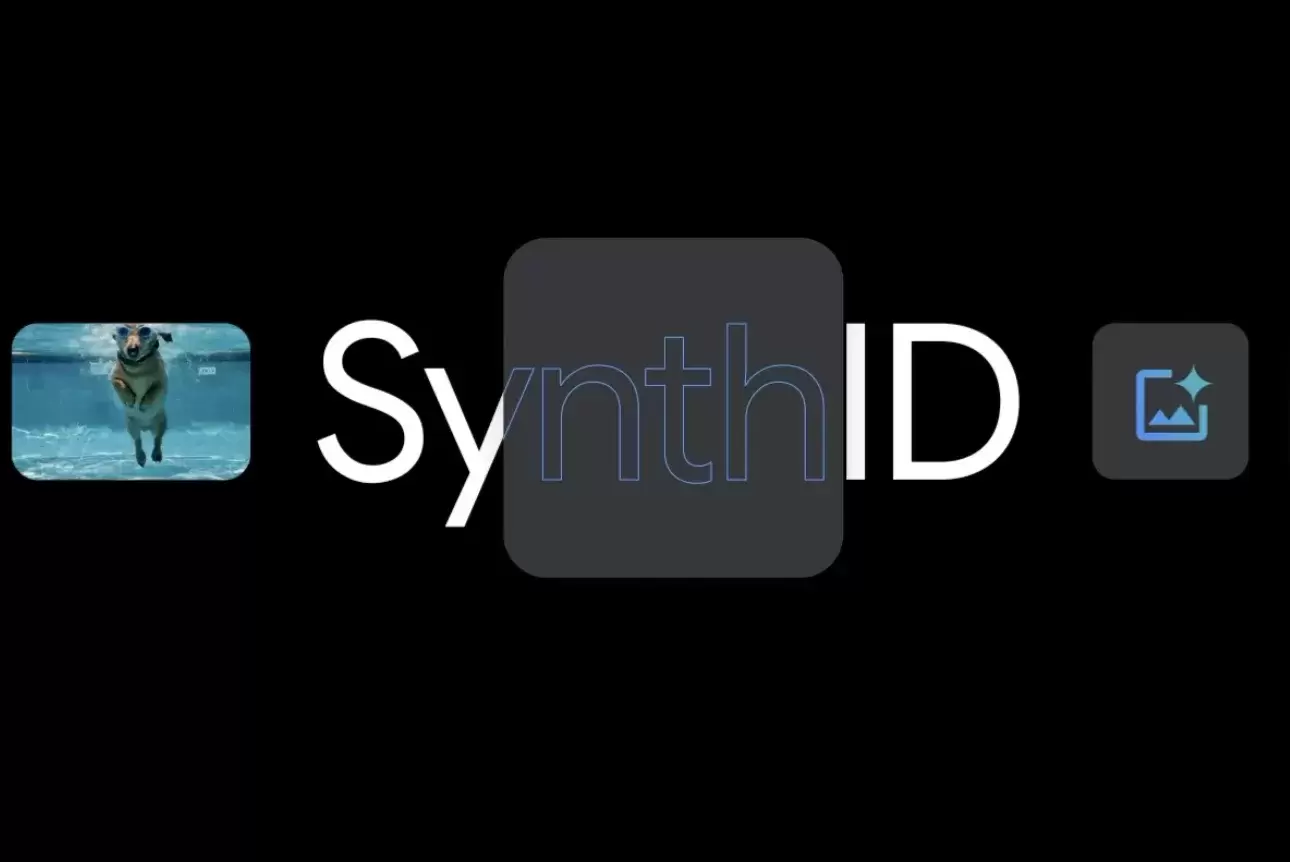
SynthID Detector can identify digital watermarks in AI-generated or AI-edited images, videos and audio. Discover how it works, its limitations and why content provenance is becoming increasingly important.
Published on9 October 20264Views0 Reviews0 Comments

As generative artificial intelligence tools become increasingly sophisticated, distinguishing content created by a person from material produced or modified by AI is becoming more difficult. Realistic images, convincing videos and synthetic voices can now be generated in minutes, often without any obvious indication of the technology used to create them.
This is where SynthID Detector becomes particularly relevant. The tool allows users to check whether certain digital content contains a watermark associated with the use of artificial intelligence. Following an initial period of limited availability, the technology is now accessible to a much wider audience.
Although SynthID Detector may informally be described as an AI detector, there is an important distinction to make. It does not simply examine a file and attempt to guess whether it was created by artificial intelligence. Instead, its primary function is to look for digital watermarks embedded directly into the content.
What is SynthID?
SynthID is a digital watermarking technology pioneered by Google DeepMind to help identify content generated or modified using artificial intelligence systems.
Unlike a conventional watermark, such as a visible logo placed over a photograph, a SynthID watermark is designed to be imperceptible to people viewing or listening to the content. For images and video, the signal can be embedded within the visual information itself, while audio watermarking can work with components of the audio signal.
One of the main advantages of this approach is that identification does not depend exclusively on file metadata. Metadata can disappear when content is converted, edited, downloaded or uploaded to another platform. A watermark embedded directly into the content has the potential to remain detectable after common editing and sharing processes.
The technology is also designed to remain detectable after certain transformations, including compression, colour changes and filters. However, this does not mean that the signal is impossible to degrade or remove.
SynthID and SynthID Detector are not the same thing
It is useful to distinguish between the two concepts. SynthID is the technology used to watermark and identify content, while SynthID Detector is a tool that allows users to analyse compatible files and search for that signal.
In practical terms, the process is straightforward. A user uploads a supported media file for analysis and the system checks it for a recognised watermark. If a watermark is detected, the result can indicate that the content was likely generated or edited using an AI model that supports the technology.
This distinction is essential because it prevents one of the most common misunderstandings surrounding AI detection: a negative result does not necessarily mean that a piece of content was created by a human.
What types of content can SynthID Detector analyse?
SynthID Detector currently supports three major categories of media content.
- Images - the tool checks for the presence of a watermark within the image.
- Video - the system can identify segments of a video in which a compatible watermark is detected.
- Audio - the tool can detect portions of audio containing a recognised watermark signal.
SynthID technology also has applications involving AI-generated text, but the capabilities of the Detector should not be confused with every type of content for which the wider watermarking technology may be used.
A negative result does not prove that content is human-made
This is perhaps the most important limitation to understand. When SynthID Detector finds a watermark, it has identified an intentional signal that can associate the media with a compatible system. However, the absence of that watermark does not prove that the content was created without artificial intelligence.
There are several reasons why AI-generated material might produce a result in which no watermark is detected. The content may have been created using a model that does not support SynthID, it may pre-date the implementation of watermarking technology, or it may have undergone extensive modifications that weakened the signal.
The quality of the uploaded media can also affect detection. Repeated compression, significant transformations and intensive editing may make a watermark more difficult to identify. As with virtually any verification mechanism, the possibility of unusual or incorrect results cannot be completely eliminated.
A digital watermark should therefore be treated as one piece of evidence about the provenance of content rather than as a universal and infallible guarantee of authenticity.
How is watermarking different from a general AI detector?
The two approaches attempt to address related questions, but they rely on fundamentally different mechanisms.
A general AI detector typically looks for patterns associated with artificial generation. It might analyse characteristics within an image, linguistic structures in a piece of text or other signals and then estimate the likelihood that the content was generated using artificial intelligence. In other words, it relies on inference.
Digital watermarking follows a different principle. The system creating the content deliberately introduces a signal that can subsequently be detected. Instead of relying solely on patterns to infer the origin of the material, the verification process searches for information intentionally embedded during content creation.
| Digital watermarking | General AI detection |
| Looks for an intentionally embedded signal | Analyses patterns and characteristics |
| Depends on compatible technology being used | Can potentially analyse content without a watermark |
| Can provide a strong signal about provenance | Usually produces an estimate or classification |
| May not identify content generated by unsupported systems | Can have broader coverage but greater uncertainty |
Why is this technology becoming important?
The rapid adoption of generative AI has created significant opportunities for businesses, creators and communications professionals. Producing images, adapting existing material, developing prototypes and accelerating creative workflows have all become considerably more accessible.
At the same time, easier content generation introduces new challenges. An artificial image can circulate without its original context, a generated photograph can be presented as evidence of a real event and a synthetic voice can be mistaken for an authentic recording.
As a result, the conversation is gradually moving beyond simple detection towards a broader concept: digital content provenance. The objective is not merely to ask whether something looks artificial, but to understand where it came from, which technologies were involved in creating it and what modifications may have been made.
There is still no universal solution
One of the challenges is the absence of a single watermarking technology universally adopted by every artificial intelligence company and platform. Different types of content also create different technical requirements. Watermarking an image is not exactly the same challenge as watermarking audio or video.
The more realistic direction is therefore a layered ecosystem in which watermarking, provenance metadata, authentication mechanisms and verification tools work together to provide more information about the origin and history of digital files.
SynthID itself is increasingly part of an ecosystem that extends beyond Google's own technologies, with other organisations and AI systems participating in compatible approaches to content identification.
What does this mean for brands and businesses?
For businesses, this development goes far beyond concerns about deepfakes. Artificial intelligence is already being incorporated into workflows for advertising campaigns, social media, product pages, videos, imagery and wider digital communications.
Organisations therefore need to define how AI can be used, which content requires verification and how transparency should be maintained. A responsible digital strategy is not simply about adopting new tools quickly. It also requires an understanding of the operational, reputational and technological risks associated with them.
These questions increasingly intersect with data governance, security, brand reputation and digital experience. Organisations establishing policies and processes around AI can benefit from incorporating them into a wider digital transformation strategy, rather than treating every new artificial intelligence tool as an isolated initiative.
Generative AI requires new rules of trust
The ability to generate highly convincing content will continue to improve. Consequently, relying solely on human perception - looking at an image and deciding whether it appears authentic - will become increasingly unreliable.
Tools such as SynthID Detector represent an important shift because they move part of the verification process towards technical mechanisms. However, no individual technology should be regarded as an absolute guarantee.
For companies publishing large volumes of digital material, this also reinforces the importance of establishing clear editorial processes, defining responsibilities and maintaining consistent quality standards. A modern content strategy increasingly needs to consider not only SEO, editorial quality and conversion, but also the provenance and reliability of the digital assets being used.
The future is about provenance, not just detection
SynthID Detector illustrates how the discussion around AI-generated content is maturing. Rather than relying exclusively on algorithms that attempt to determine whether something appears to have been generated by AI, greater attention is being given to systems that provide information about origin and creation processes.
There is still a long way to go before such mechanisms become universal. A negative detection result does not exclude the use of artificial intelligence, and any watermarking system has limitations. Important decisions should therefore consider multiple signals and sources of evidence.
For brands and organisations, the broader conclusion is clear: the adoption of artificial intelligence should develop alongside mechanisms for transparency, verification and trust. As the boundary between human and synthetic content becomes less obvious, managing that trust will become an increasingly important component of digital strategy.
Businesses seeking to understand how these changes affect their processes, content and digital channels can incorporate these questions into a broader programme of digital consulting, aligning technology, communication and business objectives.
If you enjoyed this article, follow us on LinkedIn...
Add this news source to your preferences.



Rate this article







0 Comments