




 Comment
Artificial Intelligence agents are changing the way consumers discover, compare and buy products online. For brands, the next challenge will be deciding who controls the experience, the data and the customer relationship.
Published on9 September 20268Views0 Reviews1 Comment

For years, ecommerce companies have competed for consumer attention across search engines, social media, marketplaces and digital advertising campaigns. Now a new competitive front is emerging: who controls the Artificial Intelligence through which consumers shop?
The question may sound futuristic, but the shift is already under way. Assistants such as ChatGPT, Claude and Gemini are evolving from tools that recommend products into systems that can participate directly in the purchasing process. At the same time, retailers are starting to integrate AI agents into their own online stores, allowing customers to search catalogues, compare alternatives, receive recommendations and obtain support after a purchase.
For brands, this means that the next major battle in ecommerce may not take place exclusively on a Google results page or a social media feed. It may happen inside a conversation with an Artificial Intelligence system.
From search engines to commerce agents
The underlying logic is not entirely new. SEO has always been about making a company more visible to an intermediary - the search engine - that influences the user's decision. More recently, concepts such as Generative Engine Optimization have started to examine how brands can gain visibility within answers generated by AI models.
Commerce agents add another dimension. Instead of simply recommending a shop or product, they can actively participate throughout the buying journey.
Anthropic presented an architecture designed specifically for this scenario on 2 September 2026. Its Building Commerce Agents with Claude project includes technical patterns, safeguards and examples for creating AI agents connected to a company's commercial operations.
Among the examples are two types of agent that clearly illustrate the transformation taking place: one designed for shoppers and another designed to support the teams managing the business.
The agent that shops alongside the customer
Imagine a consumer visiting an outdoor equipment store and typing: "I need equipment for a weekend camping trip with two adults and two children".
Instead of browsing dozens of categories, applying filters and manually comparing several products, the customer could simply speak to an agent integrated into the store. The system could search the catalogue, identify suitable products, check compatibility, compare prices and features, and present a personalised selection.
With the user's permission, it could also add items to the basket and guide the customer towards payment.
After the purchase, the same agent could remain available to answer questions about delivery, exchanges, returns or order status. The experience would no longer be fragmented across search, product pages, customer accounts and support services, but could instead become a continuous conversational interface.
Anthropic states that some retailers using Claude-based shopping agents have recorded baskets up to 35% larger and customers 60% more likely to complete a purchase. These figures should naturally be interpreted within the context of the implementations referred to by the company itself, but they help illustrate the commercial potential of these interfaces.
AI agents can also work behind the scenes
The transformation is not limited to the customer-facing side of ecommerce. Agents can also operate as internal tools for ecommerce, marketing and management teams.
An online store manager could, for example, ask which products have remained in stock for too long and which should be discounted to improve inventory turnover.
The agent could combine inventory data, sales history, margin, demand and sales velocity to produce specific recommendations. It could also prepare pricing changes, create product segments or draft an initial promotional campaign.
Important decisions should, of course, continue to include human approval. However, this use of AI can significantly reduce the work required to transform large volumes of data into operational decisions.
This is precisely where a well-defined digital transformation strategy becomes increasingly relevant. Implementing Artificial Intelligence should not simply mean adding a chatbot to a website. Businesses need to understand which processes can be automated, which data is available, which integrations are required and where AI can generate genuine business impact.
Consumers are increasingly willing to shop through AI
This technological evolution is taking place alongside a change in consumer behaviour. According to data published by Bain & Company for the 2026 holiday season, 24% of US online shoppers plan to begin their gift search on AI platforms such as Claude, Gemini or ChatGPT. In 2025, the figure was 17%.
At the same time, 60% say they intend to begin their journey on retailer or brand websites, compared with 51% the previous year, while some consumers also expect to use agents offered directly by retailers.
These behaviours are not contradictory. A consumer may begin by asking an external assistant which laptop to buy, then visit a brand's website and use a second agent to clarify differences between models before completing the order.
In practice, several layers of Artificial Intelligence may begin to coexist within the same purchase journey.
Two models are competing for the customer relationship
Agent-based commerce appears to be developing mainly around two models.
1. The AI platform controls the interface
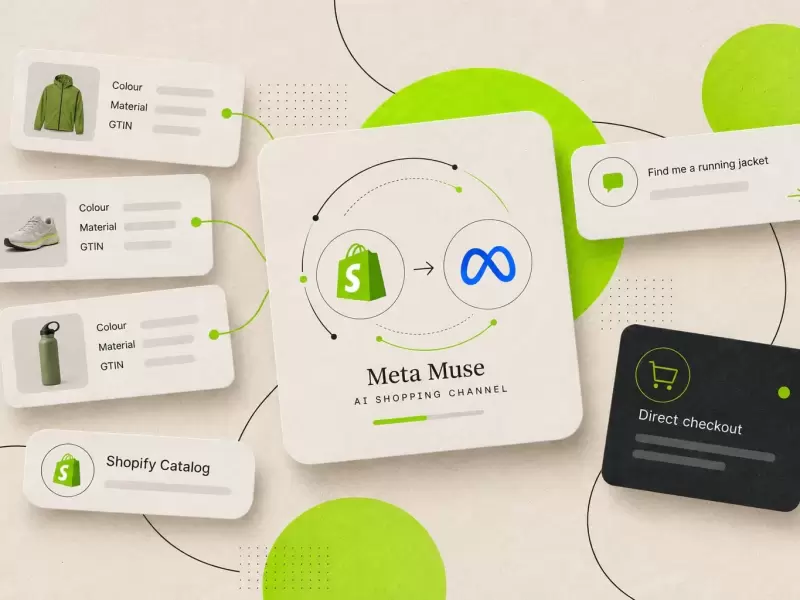
In the first model, the customer starts on an external platform. They ask ChatGPT, Gemini or another assistant what they should buy, receive recommendations from different merchants and may eventually complete the purchase without leaving that interface.
OpenAI took an important step in this direction when it introduced Instant Checkout and the Agentic Commerce Protocol in September 2025, developed in collaboration with Stripe. The technology was designed to enable agents, consumers and merchants to communicate throughout a transaction.
Google is pursuing a similar approach through the Universal Commerce Protocol, developed with companies including Shopify, Etsy, Wayfair, Target and Walmart. Its goal is to establish a common language between agents, commerce systems and payment providers.
In this scenario, product discovery and a significant part of the customer experience take place outside the digital channels directly controlled by the brand.
2. The brand controls its own agent
In the second model, the consumer visits the company's website or app directly and interacts with an Artificial Intelligence agent there.
The difference is strategic. The brand continues to control the catalogue, the context of the experience, the content, the purchasing process and the customer relationship. It can also use first-party data, naturally within the appropriate consent and data protection rules, to improve personalisation over time.
For many companies, this model could transform a traditional online store into an experience that feels much closer to speaking with a specialist salesperson who is always available and able to understand complex requests expressed in natural language.
The website becomes more than a collection of pages
The development of commerce agents may also change the way businesses think about building online stores.
For many years, a strong ecommerce experience mainly meant creating intuitive categories, efficient filters, detailed product pages and a simple checkout process. All of these elements will remain essential, but agents introduce an additional interaction layer.
A store prepared for this environment needs well-structured product data, up-to-date information about prices and inventory, systems capable of communicating through APIs and an infrastructure that allows external services to be integrated securely.
For this reason, the future of commerce agents is directly connected to the quality of the underlying technology. A strong approach to integrations and connectors may become just as important as the design of the customer-facing interface.
First-party data becomes even more valuable
If a growing share of product discovery happens through third-party platforms, companies will have even more reason to invest in the channels where they maintain a direct relationship with their customers.
Purchase history, declared preferences, loyalty programmes, website behaviour, email marketing subscriptions and data collected with consent can all help a brand provide more relevant experiences.
An agent integrated into a store and aware of a customer's context can respond very differently from a generic assistant. It may understand which sizes are normally purchased, avoid recommending products similar to items already owned or suggest accessories that are compatible with a previous purchase.
This capability makes first-party data an even more strategic asset, while simultaneously increasing the responsibility businesses have to manage, protect and use that data transparently.
Preparing ecommerce for the age of agents
Businesses do not need to replace their store search function with an AI agent overnight. For many organisations, a gradual approach will be more appropriate.
- Structure the catalogue correctly - descriptions, attributes, variants, prices and availability need to be understandable by automated systems.
- Improve integrations and APIs - an agent can only carry out tasks reliably when different systems can communicate effectively.
- Invest in SEO and content - even in an Internet increasingly shaped by AI, clear, useful and semantically structured information will continue to support discovery.
- Define automation limits - pricing changes, refunds and other sensitive actions should be governed by rules, permissions and approval mechanisms.
- Preserve the direct customer relationship - the more intermediaries that emerge, the more strategically valuable brand-owned channels will become.
The next competitive advantage may be conversational
The race for AI-powered commerce will not only be a contest between OpenAI, Google, Anthropic and other technology companies. It will also be a competition between brands seeking to create more useful, faster and more personalised shopping experiences.
Some businesses will depend mainly on large AI assistants to reach new consumers. Others will develop their own agents. Many will probably combine both models.
Whatever approach they choose, one conclusion is becoming increasingly clear: companies that retain control over their data, digital systems and direct customer relationships will be better positioned to adapt.
Ecommerce is moving from pages that users navigate towards systems with which they can have a conversation. For brands, preparing for that transition requires a combination of technology, user experience, data, content and strategy. That integrated approach may ultimately determine which businesses merely appear in an AI recommendation and which succeed in building a lasting relationship with the customer.
If you enjoyed this article, follow us on LinkedIn...
Add this news source to your preferences.



Rate this article






1 Comments
This article gives a comprehensive overview of how AI agents are reshaping ecommerce, especially with the shift from conventional search to conversational buying experiences. I agree that integrating AI like Claude or ChatGPT can enhance personalization and efficiency, but I’m skeptical about the real impact of brand-controlled agents versus those managed by big platforms. The cited uplift in basket size is intriguing, but I wonder how sustainable these results will be as consumer trust and data privacy concerns evolve.